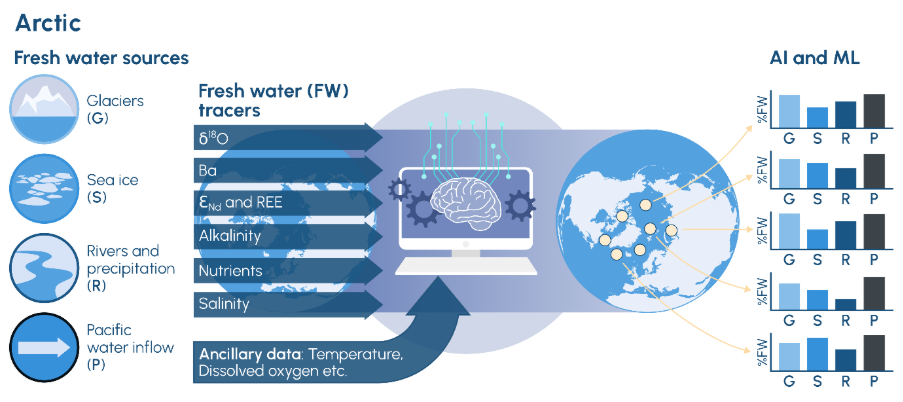
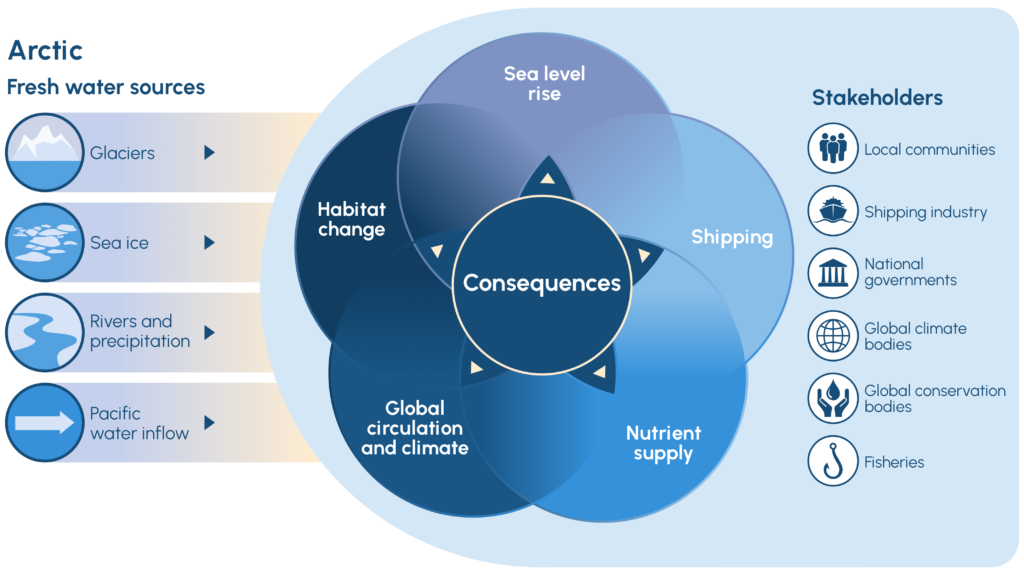
Figure 1: Schematic overview of Arctic freshwater sources, tracers, and AI/ML analysis within the AISIT project. Freshwater sources include glaciers (G), sea ice (S), rivers and precipitation (R), and Pacific water inflow (P). Key freshwater tracers (δ¹⁸O, Ba, εNd and REE, alkalinity, nutrients, salinity) along with ancillary data (temperature, dissolved oxygen, etc.) are integrated into a machine-learning framework. The resulting standardized, machine-readable database enables assessment of the relative contribution of each freshwater source across the Arctic region. Figure 2: Why AISIT Matters. This figure highlights the environmental changes driving the need for AISIT and the stakeholders who benefit. Climate change in the Arctic is altering the amount of freshwater into the Arctic Ocean influenced by glacial melt, sea ice melt, outflows from rivers and inflows from other ocean regions. The flow of freshwater in the ocean can be traced by naturally occurring isotopes, such as delta Oxygen-18, of which many measurements already exist. The AISIT database holds these data in a format that can be readily accessed by researchers and machine-learning tools to answer key questions on where freshwater is flowing and what its impacts could be.